

Navigating 2026: Key Investment Themes from 8 Industry Leaders
Following what has been a notably strong year across most major asset classes in 2025, we felt it was important not to rely on headline optimism as we look ahead to 2026.
Over recent weeks, we heard from eight leading fund managers across different asset classes and regions to gain their forward-looking perspectives. We discussed:
- The most likely economic and market scenarios for 2026
- Where risks may be underappreciated
- Which sectors and themes could drive returns
- How portfolios may need to adapt
The Backdrop: Strong Growth, Narrow Leadership
2025 delivered strong fund performance across many sectors, particularly in global equities. However, much of this growth has been driven by a relatively concentrated group of large-cap companies, particularly within technology.
While economic resilience has surprised positively, valuations in certain areas now reflect high expectations. That does not mean a correction is inevitable – but it does mean selectivity and diversification become increasingly important.
Below we share both a concise summary overview of what this means for us as long-term investors.
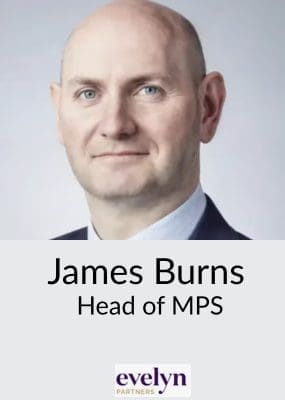
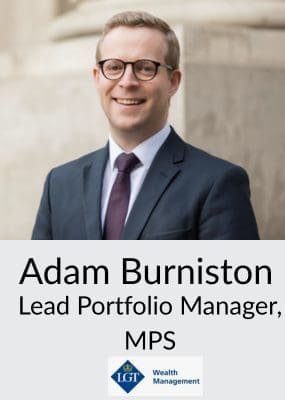
Our Experts






Key Themes
Here’s what our eight experts are watching in 2026. We’ve grouped their insights into 5 key themes to show how markets may move and what it could mean for your investments.
- Bonds & Interest rates
- Equities & Market opportunities
- Alternatives & gold
- Geopolitical (& other) risks
- Technology & Artificial Intelligence
Theme 1: Bonds & interest Rates
After several years of volatility, fixed income markets are beginning to offer more compelling opportunities again. While UK government bond yields have risen less than in some global peers, relative value remains – particularly if inflation continues to moderate and economic growth slows. Several of our experts see scope for yields to drift lower if labour markets soften and price pressures ease, which could support bond prices.
At the same time, bond markets remain sensitive to shifting rate expectations and fiscal policy decisions. Rather than taking a one-directional view, the consensus is to remain selective – balancing exposure across government and corporate bonds while keeping duration risk carefully managed. Elevated starting yields now provide income potential that has been largely absent for much of the past decade, and bonds are once again playing their traditional role as a stabilising force within diversified portfolios.
Key insight: UK government bonds are less attractive than global alternatives, but still offer modest upside if inflation falls and the job market weakens.
Expert Highlights:
“While Gilts are less attractive relative to global alternatives, we still see modest upside as inflation continues to fall.” – David Hood
“Moderate falls in Gilt yields could present an exit opportunity to fuel bets in investment grade bonds.” – Adam Burniston
What this means for you:
- Our investment providers will continue holding selective UK and global bonds to provide income and stability.
- Portfolios are monitored closely for tactical adjustments as yields move.
Theme 2: Equities & market opportunities
Equity markets continue to be supported by resilient corporate earnings, fiscal spending, and gradually easing financial conditions. However, leadership within markets is evolving. Valuations in parts of the US market appear stretched, and concentration risk remains a key discussion point. As a result, attention is shifting toward opportunities beyond the US – particularly in Europe, Japan, Asia and Emerging Markets, where valuations are generally more attractive and sentiment is improving.
While short-term volatility is likely, the broader backdrop does not currently suggest an imminent downturn. Instead, growth appears steady, supported by government stimulus, infrastructure investment and business expansion. For long-term investors, this environment reinforces the importance of global diversification and maintaining exposure to a broad range of sectors and market capitalisations rather than relying on a narrow group of dominant companies.
Key Insight: Global growth is expected to remain resilient, but valuations are concentrated, especially in the US. Value opportunities are emerging in Europe, Asia, and Emerging Markets.
Expert Highlights:
“Global growth is likely to remain resilient, supported by fiscal spending and gradually easing financial conditions.” – Dan Appleby
“Value opportunities seem to be outside of the US at the moment; Asia, EM, and Europe offer potential.” – Adam Burniston
What this means for you:
- Equity allocations are diversified globally to capture opportunities.
- Focus remains on balancing growth potential with risk management.
Theme 3: Alternatives & gold
In an environment where geopolitical tensions, fiscal expansion and policy uncertainty remain present, alternative assets continue to play an important role. Gold in particular retains a strong strategic case. Central bank demand remains supportive, and the metal historically performs well during periods of falling real yields, inflation surprises or currency weakness.
Beyond gold, infrastructure, hedge strategies and defined return approaches are being used to enhance diversification and improve portfolio resilience. These assets are not designed to replace traditional equities or bonds, but to complement them — helping to reduce volatility and provide alternative sources of return when mainstream markets face disruption.
Key insight: Gold and other alternatives remain valuable hedges against inflation, geopolitical risk, and market volatility.
Expert Highlights:
“Gold serves as valuable insurance against risks like dollar weakness, inflation spikes, or geopolitical tensions.” – David Hood
“We maintain our overweight to Gold and Silver due to the positive backdrop for these metals.” – Laurence Boyle
What this means for you:
- Strategic exposure to gold, silver, and alternatives provides portfolio protection.
- These allocations act as a hedge in uncertain market conditions.
Theme 4: Geopolitical (& other) risks
Trade tensions, elections, fiscal sustainability concerns and regional conflicts remain part of the global backdrop. While recent geopolitical events have not caused widespread market dislocation, they serve as reminders that risks can emerge unexpectedly. At the same time, central banks appear increasingly willing to adjust policy in response to economic conditions, and in several regions inflation expectations are moderating.
The overall outlook can best be described as cautiously optimistic. Markets may continue to experience short-term swings driven by sentiment and valuation adjustments, but the balance of risks currently points toward steady growth rather than recession. In this environment, well-diversified, multi-asset portfolios remain the most effective way to manage both known and unforeseen risks.
Key Insight: Trade tensions, fiscal policy, and AI/technology risks may create volatility, but the outlook remains cautiously optimistic.
Expert Highlights:
“Markets face concentration risk and uncertainty around AI-related stocks, but diversification remains key.” – Helen Bradshaw
“We remain cautiously optimistic despite geopolitical unpredictability, with portfolios designed to manage both known and unknown risks.” – Darren Ripton
What this means for you:
- Portfolios are structured to weather short-term volatility.
- Diversification across regions, sectors, and asset types helps mitigate risk.
Theme 5: Technology & artificial intelligence
Artificial intelligence continues to shape the investment landscape. While some commentators question whether enthusiasm around AI has become excessive, our experts do not view the sector as a speculative bubble. Instead, the market is evolving. Investors are becoming more discerning, differentiating between companies with sustainable earnings potential and those unlikely to deliver long-term value.
The investment required to support AI infrastructure — including data centres, energy capacity and regulatory adaptation — is significant. However, the revenue ambitions within the sector appear plausible, and innovation continues at pace. Periods of market pullback may provide opportunities to increase exposure selectively. As with all thematic investing, the key is diversification and disciplined stock selection rather than chasing momentum.
Key Insight: Artificial Intelligence is evolving from hype-driven momentum to a more selective, sustainable investment opportunity.
Expert Highlights:
“We remain positive on AI equities through diversified technology exposure, with increasing focus on identifying long-term winners.” – James Giblin
What this means for you:
- AI remains a powerful structural growth theme, but exposure is carefully managed within diversified portfolios rather than concentrated in a single sector.
- Investment focus is on identifying sustainable companies with credible earnings potential, while using broader multi-asset diversification to manage the risks at can accompany fast-moving technology trends.
Looking Ahead
Our Approach
Financial Advice Centre Ltd Managing Director, Piers Mepsted considers what this means for clients.
“As we enter 2026, markets are likely to remain dynamic, presenting both opportunities and challenges. While no one can predict every twist in the market, client portfolios are designed to navigate uncertainty and capture opportunities, helping you move confidently toward your financial goals. We continue to maintain regular contact with market experts throughout the year, ensuring your portfolio stays on track and aligned with your long-term objectives.”
He continued, “Our investment strategy remains:
- Forward-looking rather than reactive
- Evidence-led rather than headline-driven
- Balanced between opportunity and risk management
We continue to monitor developments in AI, interest rate policy and global growth dynamics. Where appropriate, adjustments are made thoughtfully — not tactically chasing short-term momentum.
Strong years like 2025 are welcome. The key to long-term success, however, is consistency of process through both favourable and more challenging environments.”
Markets will always evolve, but your financial objectives remain the priority. If you have any questions about the outlook for 2026 – or simply want reassurance that everything remains on track – please get in touch with us to discuss.